
Carmen Lau




| Picture | Part Number | Manufacturer | Stock | Action |
|---|---|---|---|---|
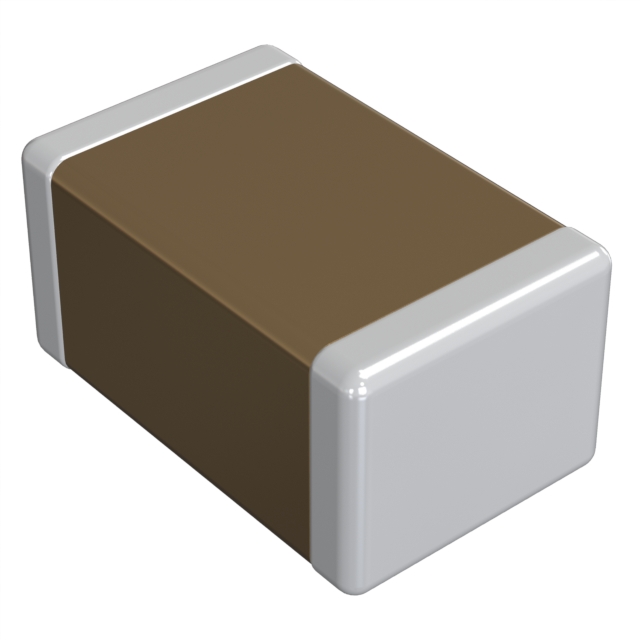 | GRM188R60J226MEA0D | Murata | 6,210 | |
| GRM188R60J226ME15D | Murata | 8,080 | |
 | GRM188R60J226ME15J | Murata | 9,270 |
No. First map the local build schedule and approved placements, then reconcile stock and receipts. The market forecast is a dated input to planning discussions, not a direct measurement of demand for this exact ordering code.
Not necessarily. The nominal value is defined under specified test conditions. Use exact-part characterization and application validation to establish effective capacitance at the required bias, temperature, and frequency.
The reference sheet documents different reel formats under the same base specification. Confirm the current specification, purchasing approval, line compatibility, and actual offered packaging before changing the order code.
The cited forecast does not establish that. Exact-code prices and delivery terms require dated supplier evidence. Product mix, manufacturing allocation, order size, and the offered lot can differ from the global unit trend.
GRM188R60J226MEA0D is a Murata 22 µF, 6.3 V, X5R MLCC in a 0603 package. A smartphone demand forecast can justify revisiting its purchasing plan, but engineering approval still depends on the capacitance required at the actual rail voltage, temperature, and frequency. A useful BOM review connects the approved circuit requirement to model-level build quantities, then checks reel packaging and usable inventory before changing an order.
On August 26, 2026, IDC forecast a 16.7% decline in worldwide smartphone shipments for the year, to just over one billion units. This replaced its earlier projection of a 13.9% decline. IDC attributed the worsening outlook to memory cost and supply pressures and described an uneven impact across product segments. These are forecasts, not completed full-year shipment results. IDC, August 26, 2026.
For a component buyer, the useful implication is to revisit the assumptions beneath the build plan. A global percentage does not specify the order book for one handset, the number of this capacitor used per board, or the amount already committed to production. It also does not establish a price change for GRM188R60J226MEA0D.
Separate three decisions: how many approved boards to build, which components those boards require, and when to release material against the schedule. A demand revision can change the first and third decisions immediately. Changing the second requires an engineering basis.
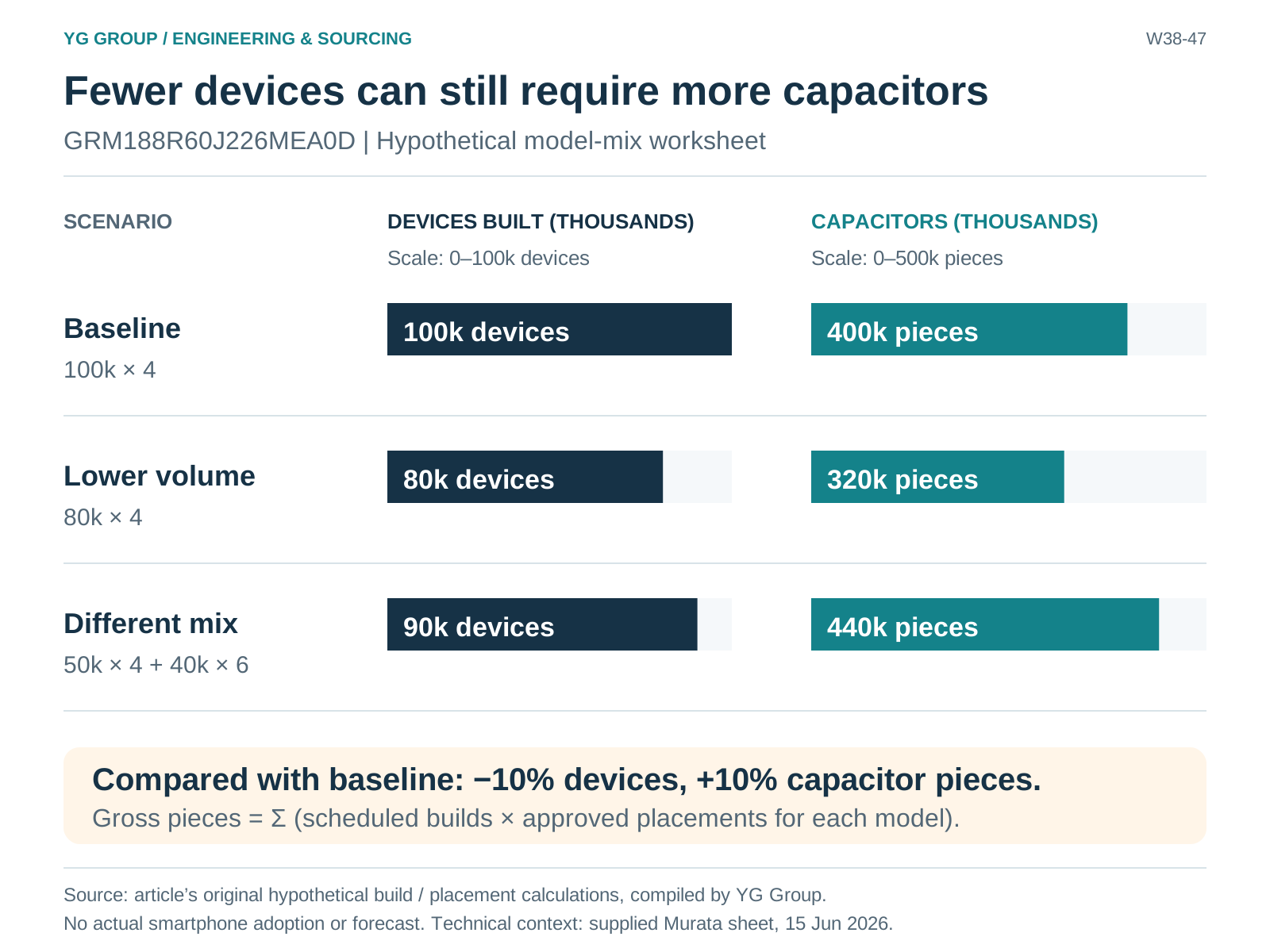
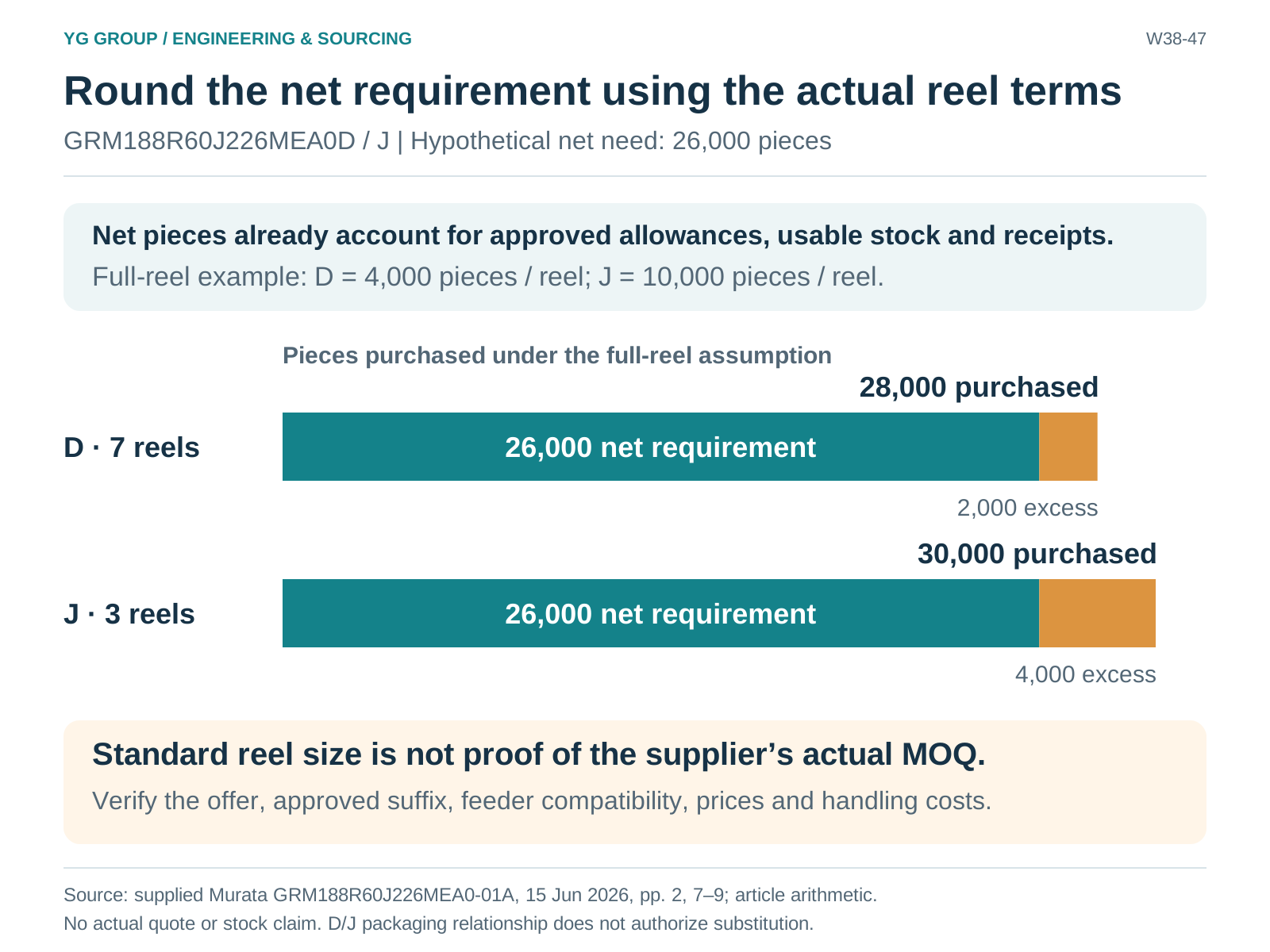
**Figure 1. Fewer devices can still require more capacitors.** Original hypothetical model-mix arithmetic from the article, compiled by YG Group. Separate labelled scales show device counts and capacitor counts. Assumed build quantities and placements are not a teardown, customer forecast, named-phone adoption claim or recommendation to change the approved circuit. Gross quantities do not yet deduct inventory or determine reel orders. **Figure 2. Round the net requirement using the actual reel terms.** Original full-reel arithmetic from the article, compiled by YG Group. D/J packing quantities use the supplied Murata June 15, 2026 reference sheet, pages 2 and 7–9; no public URL for that revision is invented. The example assumes the 26,000 net need has already reconciled applicable allowances, usable inventory and eligible receipts. Actual order multiples, prices and substitution approval remain offer/project inputs.This article uses GRM188R60J226MEA0D as a concrete BOM example. It does not claim that the part is fitted to any named smartphone. The reviewed Murata specification covers consumer and industrial equipment; an application category is not evidence of adoption in a particular brand or model.
Murata’s GRM188R60J226MEA0-01A reference sheet, dated June 15, 2026, identifies the base device and its packaging variants. The D suffix is part of the ordering code and belongs in the purchasing record. The following values come from pages 2 and 3 of that reference sheet.
| Parameter | Documented value | What it means for the BOM review |
|---|---|---|
| Nominal capacitance | 22 µF | Starting value under the specified measurement conditions |
| Initial tolerance | ±20% | Does not include every operating effect |
| Rated DC voltage | 6.3 V | Review the complete applied waveform, including transients |
| Temperature characteristic | X5R: ±15% from −55°C to +85°C relative to 25°C in the specified no-bias test | Does not guarantee capacitance under DC bias |
| Body size | 1608 metric / 0603 inch; 1.6 ±0.2 × 0.8 ±0.2 × 0.8 ±0.2 mm | Include thickness and dimensional tolerances in mechanical review |
| Capacitance test | 120 ±24 Hz, 0.5 ±0.1 Vrms, room temperature | Use the appropriate test conditions for specification comparison |
| D packaging | 180 mm paper-tape reel, 4,000 pieces | Relevant to order multiples and feeder preparation |
| J packaging | 330 mm paper-tape reel, 10,000 pieces | Related purchasing option requiring approval where the full code is controlled |
The ±20% initial tolerance corresponds arithmetically to 17.6–26.4 µF under the applicable capacitance test. That interval is not a guaranteed capacitance range on a powered smartphone rail. DC bias, temperature, AC amplitude, and aging require their own assessment.
An incoming measurement at an arbitrary frequency or a reduced test voltage can therefore be misleading. Murata specifically notes that a meter’s applied voltage can fall when measuring a high capacitance. Record the actual test settings and confirm the voltage at the part before using a reading to accept or reject a lot. This is a measurement-method check, not evidence that a particular lot has failed.
A BOM entry that says only “22 µF, 6.3 V, 0603” leaves several important conditions unstated. A useful engineering record identifies the rail, allowable ripple and transient excursion, minimum effective capacitance, relevant frequency range, temperature envelope, and assembly constraints.
The reference sheet explains that high-dielectric-constant capacitance changes with applied voltage and time. Its general graphs illustrate these mechanisms, but the illustrated samples are not this exact part. In particular, the X5R temperature example is labeled 22 µF at 4 V, whereas GRM188R60J226MEA0D is rated at 6.3 V. A shared nominal capacitance does not make that graph an exact-part characterization. The DC-bias example is also for another capacitor. Numerical retention at 1.8 V, 3.3 V, or a battery voltage is therefore not established by those plots. (Murata reference sheet, pages 11–13.)
For a cost-driven alternative, request characteristic evidence for the exact proposed device at the application’s operating point. Compare that evidence with the circuit requirement and verify the resulting board behavior. A higher nominal voltage or the same dielectric code does not, by itself, establish an identical bias curve or impedance response.
Do not respond to lower demand by removing parallel capacitors from an approved rail without checking why they were present. They may satisfy a charge requirement, impedance target, thermal constraint, or placement need. A reduced production quantity changes material demand; it does not reduce the instantaneous current demanded by each operating device.
The 6.3 V rating also remains a voltage limit, rather than a statement of usable capacitance. Murata’s instructions cover DC with superimposed AC, pulse voltage, and abnormal surges. Its short-duration voltage-proof test is not permission for a higher operating rail. Review the actual waveform rather than only its nominal label. (Murata reference sheet, pages 3 and 11.)
A component forecast becomes useful when it can be reproduced from the production plan. For each model, record the scheduled build quantity, the approved number of GRM188R60J226MEA0D placements, and the BOM revision that supports that count.
The basic gross requirement is:
Gross pieces = sum of each model’s scheduled builds × its approved placements per build.
The table below is an original planning illustration. All build quantities and placements are hypothetical; they are not a teardown finding, customer forecast, or recommendation to add or remove capacitors.
| Scenario | Hypothetical builds and placements | Total devices | Gross capacitor pieces |
|---|---|---|---|
| Baseline | 100,000 devices × 4 placements | 100,000 | 400,000 |
| Lower volume, unchanged mix | 80,000 devices × 4 placements | 80,000 | 320,000 |
| Lower total volume, different mix | 50,000 devices × 4 placements plus 40,000 devices × 6 placements | 90,000 | 440,000 |
In the third scenario, device volume falls 10% from the baseline while demand for the example capacitor rises 10%. The difference comes entirely from the assumed product mix and approved placement counts. It demonstrates why applying the global smartphone decline directly to every capacitor order can give the wrong answer.
The production planner should retain the version of the forecast used in each calculation. When a model is delayed, canceled, or revised, update its line rather than applying an unexplained adjustment to the total. This also makes it possible to distinguish a genuine consumption reduction from a shift between weeks.
Gross consumption is not the same as a purchase quantity. Start with the approved build requirement, then add an explicitly defined process allowance and service reserve where justified. Deduct only inventory that is qualified, available for this build, and not already allocated elsewhere. Deduct confirmed receipts only if their timing supports the schedule.
A simple planning expression is:
Net pieces = max(0, gross pieces + approved allowances + approved reserve − usable available stock − eligible confirmed receipts).
Avoid counting the same incoming lot both as stock and as a future receipt. Keep material pending inspection separate from qualified stock. If alternative purchasing codes are approved, reconcile their quantities in the planning system without losing the full manufacturer code or packaging identity.
The order quantity then depends on the supplier’s actual order multiple. If an offer requires full reels, round net pieces up to that reel quantity. If cut tape or partial reels are offered, use those written conditions instead. Neither the reference sheet’s standard packing quantity nor a general market forecast establishes a supplier’s current minimum order.
For example, a hypothetical net requirement of 26,000 pieces rounds to seven D reels, or 28,000 pieces, under a 4,000-piece full-reel assumption. Under a 10,000-piece J full-reel assumption, it rounds to three reels, or 30,000 pieces. The resulting excess is 2,000 or 4,000 pieces respectively. Prices, handling costs, and feeder compatibility would still be needed to compare the actual offers.
GRM188R60J226MEA0J is documented with the same base specification and a different reel format. That relationship supports a focused packaging review. It does not authorize an unrecorded substitution, prove present availability, or make every similarly numbered Murata capacitor interchangeable. (Murata reference sheet, pages 2 and 7–9.)
Cost pressure often encourages a smaller case size or a different capacitor construction. Mechanical and electrical suitability should be evaluated together. Murata warns that changing to a smaller capacitor requires consideration of wiring width, direction, and copper thickness, as well as the land pattern. Excessive solder and board flex can place damaging stress on the ceramic body. (Murata reference sheet, pages 14–22 and 26–28.)
For the stated 1.6 × 0.8 mm body with ±0.2 mm dimensional tolerance, use the corresponding row of the mounting guidance, then validate the actual board and assembly process. The separate test-fixture drawing used for substrate-bending qualification is not a production footprint recommendation.
High-dielectric-constant capacitors can also generate vibration under AC or pulsed excitation and can produce electrical noise when mechanically stressed. In a consumer product, a replacement that passes a room-temperature capacitance check may still alter audible behavior or coupling into a sensitive circuit. Treat acoustic observations as part of the application review where relevant; no acoustic measurements for this part or a finished phone are claimed here. (Murata reference sheet, page 25.)
The operating-temperature ceiling includes self-heating. A part located near another heat source must be assessed at its actual surface temperature, and the manufacturer’s separate self-heating condition must also be respected. A passing nominal voltage check does not close the thermal review. (Murata reference sheet, pages 12 and 25.)
A lower build forecast can extend the time that reels remain in storage. The reviewed June 2026 sheet gives standard storage conditions of 5°C to 40°C and 20% to 70% relative humidity, with a temperature recommendation below 30°C. It calls for packaging and mounting checks after more than six months from delivery, and an additional solderability check after more than one year. Avoid condensation, corrosive atmospheres, and direct sunlight. (Murata reference sheet, page 10.)
These instructions help define an inventory review, but they do not create a universal shelf-life guarantee. Keep the date of receipt, storage history, packaging condition, and inspection disposition with the lot. Releasing an older reel solely because the ERP system lists a quantity can undermine the benefit of reducing new purchases.
Similarly, the sheet’s estimated-useful-life discussion is reference guidance under stated conditions, not a warranty for a finished smartphone. The qualification tests and example life curves should not become a sales claim that this capacitor guarantees a phone will last a particular number of years.
A disciplined GRM188R60J226MEA0D review starts with the 22 µF, 6.3 V, X5R specification and the real circuit requirement. It then translates model-level builds into component consumption and reconciles that demand with qualified inventory and actual purchasing terms. This allows the order plan to respond to market uncertainty while keeping the approved electrical and assembly requirements visible.
Author: Carmen Lau. Market information reviewed September 20, 2026.