
| Picture | Part Number | Manufacturer | Stock | Action |
|---|---|---|---|---|
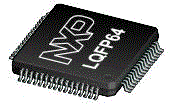 | FS32K144HAT0MLHT | NXP | 2,910 |
Both belong to the S32K144 80MHz variant (H speed code) in the M temperature grade and LH 64-pin LQFP. Both list CAN FD and FlexIO. The A option in FS32K144HAT0MLHT adds CSEc; the F option in FS32K144HFT0MLHT does not include it.
During S32K144 MCU selection, match LH if the existing PCB is designed for the 64-pin LQFP, and M if the approved requirement is the −40°C to +125°C ambient grade. LL identifies a 100-pin LQFP. Check the package drawing and full code even when the two devices use the same core.
No. NXP specifies FS32K144HAT0MLHT as an 80 MHz H-suffix part. The H and U speed codes distinguish the 80 MHz and 112 MHz options. An application that requires 112 MHz must identify a suitable exact orderable and check the applicable temperature and operating-mode restrictions.
By Evan Huang
FS32K144HAT0MLHT is an NXP 80 MHz S32K144 automotive MCU in a 64-pin LQFP with CSEc security, CAN FD, and an M ambient grade of −40 °C to +125 °C. During S32K144 MCU selection, read the H speed code, A feature code and LH package code separately. The S32K144 80MHz variant includes both A and F feature codes. Compare S32K144 security options before accepting a different part, and match the pin count to the approved footprint.
The S32K1xx data sheet, Rev. 15, §4.2 and its embedded orderable list, are the useful starting points for S32K144 MCU selection. They separate the clock, feature, temperature, package and shipment codes. NXP’s corroborates the exact LQFP64 package and identifies its drawing designation as SOT1699.
No. The product’s secure boot flow still needs key provisioning. Among S32K144 security options, the A code identifies the presence of CSEc hardware. A product’s boot behavior also depends on its firmware, nonvolatile configuration and provisioning. Confirm those elements with the released image and factory process before accepting a different code or lot for a security-dependent application.
Specify the full code, LQFP64 package, M grade, shipment packaging, quantity and need-by date. For alternatives, state whether the current board, CSEc functions and programming flow must stay the same. Request the proposed full code and relevant lot documentation so engineering can evaluate it.
Table 1: Ordering fields that can change the BOM decision | Source: NXP S32K1xx data sheet, Figure 5 and embedded orderable list | Compiled by: YG GROUP
| Code in FS32K144HAT0MLHT | Meaning for this orderable | What to verify |
|---|---|---|
| H | 80 MHz speed option | Clock tree and timing requirements for the approved firmware |
| A | CAN FD, FlexIO and CSEc security | Boot and provisioning dependencies on the security hardware |
| M | −40°C to +125°C ambient grade | The product’s operating environment and junction limits |
| LH | 64-pin LQFP | Footprint, pin assignment and peripheral routing |
| Final T | Trays or tubes in the ordering legend | Actual shipment format and feeder needs |
The S32K144 80MHz variant should be quoted and validated against the application’s 80 MHz clock assumptions. The data sheet mentions up to 112 MHz for the family, but the U code is a different option and is not offered with the M grade in the Rev. 15 ordering legend. A family maximum does not establish a valid clock configuration for the H code. When reviewing a proposed replacement, check peripheral clocks and timing assumptions as well as the core frequency. For example, a CAN FD configuration and a software timer can both depend on how the startup firmware sets up clocks and dividers.

Figure 1: Selected FS32K144HAT0MLHT orderable fields and the corresponding board, firmware and purchasing checks. | Source: NXP S32K1xx datasheet, Rev. 15, Figure 5 and embedded orderable list | Chart: YG GROUP
The similar-looking FS32K144HFT0MLHT uses the F feature option. The embedded NXP ordering list specifies CAN FD and FlexIO for both exact orderables but shows CSEc only for FS32K144HAT0MLHT. If the released image calls CSEc services, or the line provisions cryptographic keys as part of manufacture, the F code cannot supply that hardware. Conversely, seeing CSEc in the ordering list does not tell you whether a shipped MCU has been provisioned or whether your software uses the feature.
When comparing S32K144 security options, ask the firmware and factory teams to check the approved image, programming algorithm and device provisioning record together. NXP’s production flash programming note covers the SWD/JTAG programming interface and production considerations. NXP’s EEPROM functionality note shows that Flash partition settings govern how FlexNVM is used for data flash and emulated EEPROM backup. If your image depends on that layout, retain the exact partition requirements in the validation plan. Successfully loading an image with a debug tool does not demonstrate that the board can complete its normal factory programming and boot sequence.
For an existing ECU or control board, qualify the alternate on the actual PCB with the released image, the production fixture and the approved configuration. Check a power-cycle boot, the expected security functions where applicable, nonvolatile data behavior and the CAN FD signals used on the board. Review the applicable mask-set errata against the offered lots. These are useful acceptance checks even when the candidate shares the same speed and package code.
FS32K144HFT0MLHT isolates the security difference while retaining the LH package. FS32K144HAT0MLLT retains the HA feature and speed codes and changes the package. The second is a layout candidate, not a way to fill an existing LQFP64 order.
For example, a quote that changes only the A to F in this comparison may look attractive because the footprint stays the same. The important question is whether the factory expects to provision keys or whether the application depends on CSEc after shipment. A quote that changes LH to LL can keep the security feature but still fail the first physical check. Inspecting those two fields separately helps a buyer route each offer to the right engineering owner.
Table 2: Exact S32K144 candidates for engineering review | Source: NXP embedded orderable list, NXP LQFP100 product content declaration | Compiled by: YG GROUP
| Proposed orderable | Key difference from FS32K144HAT0MLHT | When to review it |
|---|---|---|
| FS32K144HFT0MLHT | Same 80 MHz, M grade and 64-pin LQFP; no CSEc | The released application and provisioning flow have no CSEc dependency, and engineering can qualify the change |
| FS32K144HAT0MLLT | Same 80 MHz, M grade and CSEc; 100-pin LQFP | The design can use the different package, with pin mux, power pins and routing reviewed |
Send the full code, drawing or board revision, required temperature grade, packaging, quantity and need-by date through a YG GROUP RFQ. If a substitute is allowed, say whether CSEc and the existing factory programming flow must be retained. Ask for the proposed exact ordering code and applicable lot or change documentation. Purchasing can then compare the offer against a short list of requirements before engineering commits to qualification. Check our NXP manufacturer listing, and compare our articles on MCU hardware-security suffix verification and NXP orderable suffix and silicon-revision BOM fit.