
Evan Huang




| Picture | Part Number | Manufacturer | Stock | Action |
|---|---|---|---|---|
 | MT41K256M16TW-107 IT:P | Micron | 7,240 | |
| MT41K256M16TW-107:P | Micron | 2,980 | |
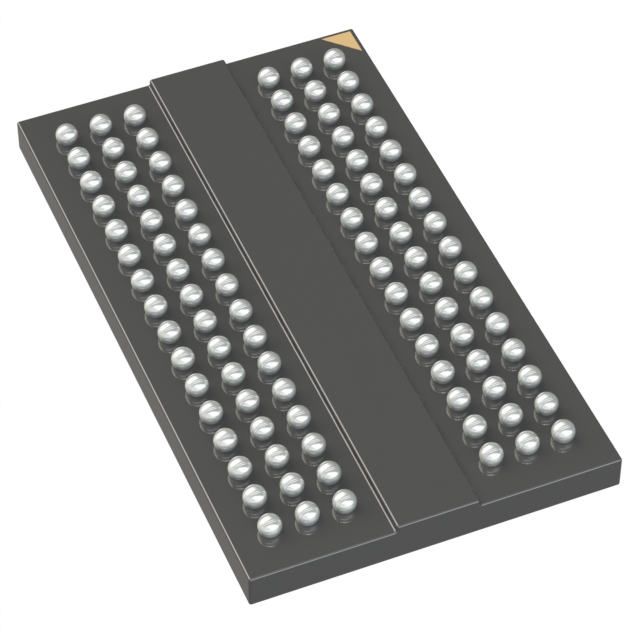 | MT41K256M16TW-107 XIT:P | Micron | 5,800 | |
| MT41K256M16TW-107 AIT:P | Micron | 3,450 |
No. TPS54618CQRTERQ1 is an automotive ordering code, and TI's datasheet states AEC-Q100 Grade 1 qualification. That identifies the component specification. A particular shipment still needs traceable transaction, labelling and handling evidence. The suffix alone cannot establish its origin or condition.
The supplied SLVSEW2A title and electrical table use 2.95 V, while recommended operating conditions specify 3 V. Use 3–6 V as the conservative design-review baseline. A design that depends on the lower corner should resolve the discrepancy with TI rather than treating the headline as the only controlling statement.
TI identifies TPS54618CQRTERQ1 as a 16-pin RTE WQFN with a nominal 3 mm × 3 mm body and exposed thermal pad. Compare the controlled drawing and recommended land pattern with the approved board; a generic 16-pin QFN description is insufficient.
Category: ComponentSourcing
Author: Evan Huang
MT41K256M16TW-107 IT:P should remain a complete identity from the approved bill of materials through the quotation, purchase order and receiving record. Removing IT or :P does not merely shorten a description. It removes fields that distinguish the temperature selection and revision in Micron's ordering system. A quotation for a similar-looking DDR3L device therefore needs an explicit comparison before it can be accepted as the approved part.
The supplied Micron DDR3L addendum defines the relevant configuration, package, speed, temperature and revision fields. Its example uses an XIT variant, and it explicitly warns that not every combination of listed options is offered. For the exact IT:P identity, Micron's own part-specific RoHS certificate names MT41K256M16TW-107 IT:P. A historical Micron change notice also lists that complete code alongside related variants.
Those sources establish identity and field meaning within their scope. They do not authenticate a received lot, establish current stock or prove that another suffix is compatible with a particular controller and board. A useful procurement process preserves those distinctions while giving engineering and purchasing a clear way to resolve discrepancies.
The MT41K prefix identifies the relevant DDR3L product family. The 256M16 configuration describes 256 million addressable words of sixteen bits, giving a nominal density of 4 Gb. That is a component organization, not a statement that every 4 Gb memory has the same bus width or pin arrangement.
No. TI indicates that supporting documentation is available for functional-safety system design. The system team remains responsible for requirements, analysis, diagnostics and validation. A component designation does not establish the completed ECU's compliance or safety integrity.
It is a close catalog relative, not an approved automotive substitute in this article. TI classifies TPS54618RTER as Catalog. Qualification, electrical details, handling and application approval must be reviewed independently before any change is released.
Capture the full code, carrier, lot references, packaging condition and moisture-related label information. The supplied addendum lists Level-3-260C-168 HR and directs users to the shipping label for actual reflow information. Opened or repacked material needs disposition under the purchaser's controlled procedure.
TW identifies the x16 package option described in the supplied addendum: a 96-ball FBGA with an 8 mm by 14 mm outline for the stated revision. The −107 speed selection corresponds to a nominal minimum clock period of about 1.07 ns at the listed CAS-latency condition. DDR data transfer occurs on both clock edges, so clock frequency and transfer rate need to be kept separate.
IT identifies the industrial temperature option in the addendum, with a case-temperature range of −40°C to +95°C. The colon and P identify the revision field. These are meaningful parts of the manufacturer identity and should not be dropped by a spreadsheet normalization rule intended to remove punctuation or spaces.
Table 1. Fields to preserve in MT41K256M16TW-107 IT:P
| Field | Meaning supported by the supplied addendum | Procurement consequence |
|---|---|---|
| MT41K | DDR3L family designation | Do not replace it with a generic DDR3 description |
| 256M16 | x16 organization, nominal 4 Gb density | Match organization as well as total density |
| TW | Stated 96-ball, 8 mm by 14 mm FBGA option | Preserve package and revision applicability |
| −107 | Listed speed selection, about 1.07 ns clock period at its defined latency | Compare timing conditions, not only a frequency label |
| IT | Industrial case-temperature option | A missing temperature field is a discrepancy to resolve |
| :P | Revision identifier | Retain it in the approved manufacturer part number |
Use a separate human-readable description if the purchasing system needs one. For example, density, organization and package can be summarized in description columns while the manufacturer-part-number field remains exact. The description helps people search and review; it should not become an alternate identity that silently overrides the full code.
The supplied addendum's example part number includes XIT. Its diagram separates the X special option from the IT temperature selection. X denotes the Premium Lifecycle Product option described in that document. It is therefore not a harmless extra character that can be deleted when comparing a quote with an approved IT part.
The distinction does not automatically mean the two devices are electrically incompatible. It means they are different manufacturer ordering identities whose relationship must be verified through applicable documentation and approval. The correct procurement response is to preserve the proposed code and ask engineering to evaluate the actual difference, rather than editing the quote until the strings match.
The same caution applies to a commercial code with no IT field. A supplier may present a family page or a commercial variant because search engines return it more readily. That page can be useful background, but it is not exact evidence for the industrial order code. The temperature requirement belongs to the approved application, not to whichever search result appears first.
Do not interpret :P as a packaging instruction. It is the revision field in the supplied coding diagram. A separate tape-and-reel or tray arrangement may appear in commercial records, but it should be documented independently and matched to the manufacturer's applicable ordering and shipping information.

Figure 1. Field map for the exact order code. The separate X option shown in the supplied addendum's XIT example must not be silently added to or removed from an IT purchase line.
This field-based approach is more robust than comparing only the beginning of a string. It allows a reviewer to say exactly what differs: organization, package, speed, temperature, special option or revision. A precise discrepancy can be evaluated; a vague statement that two parts are “both DDR3L” cannot establish compatibility.
The addendum lists several configurations, packages and speed choices. It also says that not every option can be combined into an offered product. That warning prevents a common error: constructing a plausible-looking manufacturer part number from individually valid fields and assuming the resulting product exists.
For this article's target, the exact Micron certificate supplies a separate identity check. It names MT41K256M16TW-107 IT:P explicitly. The certificate's role here is narrow: it ties a manufacturer-issued document to the full code. It is not a substitute for the electrical datasheet or a certificate of authenticity for a shipment.
A historical manufacturer change notice can provide another exact-code record, but its date and purpose matter. Micron PCN33452, revised in December 2019 and available through an authorized-distributor mirror, lists the target and related codes in a shipping-tray change. It supports historical identity and demonstrates that shipping media can change separately from the device's main code. It does not establish today's availability.
A procurement record should identify which source answers which question. An electrical datasheet supports operating conditions. An exact catalog record supports the offered identity and its current catalog fields when those fields are actually available. A change notice supports the described change. A compliance certificate supports its stated compliance scope. None should be stretched to answer all four questions.
Table 2. Source types and the decisions they support
| Source type | Useful evidence | Limit that should remain visible |
|---|---|---|
| Exact manufacturer record | Complete code and associated product identity | A family page may not establish every suffix |
| Applicable datasheet and addendum | Configuration, package and operating conditions | Option lists do not prove all combinations exist |
| Manufacturer change notice | Affected codes, change description and dates | Historical inclusion is not current production status |
| Part-specific compliance document | The named part within the document's stated scope | It does not authenticate the received physical lot |
| Supplier quotation and shipment records | Offered code, quantity, source and lot information | Commercial records need to be reconciled with technical approval |
Preserve a local copy or controlled reference to the source used for approval, including revision and date. A live link can change, redirect or return an empty template later. The goal is not to accumulate documents indiscriminately, but to keep enough evidence to reconstruct why the exact line was approved.
A nominal 4 Gb density does not determine the data-bus width. The supplied addendum includes x4, x8 and x16 organizations. They can share a total density while requiring different controller connections and package arrangements. A substitution search that uses only “4 Gb DDR3L” can therefore return electrically unsuitable results.
For MT41K256M16TW-107 IT:P, the x16 organization is central to the approved board interface. A proposed x8 device is not a simple substitute even if two devices could theoretically provide the same aggregate width in a redesigned system. That would change the board, loading, routing and controller configuration.
Package identity also needs more than a ball count. The outline, pitch, ball map and revision applicability determine whether the device matches the PCB. A purchasing description such as “96 BGA” is too broad to serve as a compatibility decision. Use the full manufacturer package code and the applicable drawing.
The revision field can be relevant to the supporting documentation and qualification history. Do not assume that a later or different revision is automatically approved, and do not assume that it must be incompatible. The correct action is to compare the manufacturer's change information and the customer's approval requirements.
A useful handoff record therefore contains separate fields for full MPN, manufacturer, density, organization, package and approved document revision. The redundancy is intentional: it makes a mismatch easier to spot while keeping one authoritative manufacturer identity.
The supplied addendum associates −107 with DDR3-1866 operation and the listed latency conditions. Approximately 933 MHz clock frequency and 1866 million transfers per second describe different aspects of the same double-data-rate interface. A supplier description that says only “1866 MHz” can therefore be ambiguous or inaccurate.
Do not approve a substitution based on the largest speed number in a listing. The controller needs compatible timing values and supported operating modes. A faster-rated memory may be usable at a slower setting under the manufacturer's conditions, but that relationship still needs to be established for the exact devices and system configuration.
The addendum's timing table also shows other speed selections and backward-compatibility notes. Those notes are useful within the documented family and conditions. They should not be generalized into a rule that every faster DDR3L part is interchangeable with every slower part regardless of organization, voltage, package or revision.
For a purchase review, record the approved speed grade and the system operating point separately. The device's rated capability is one field; the controller's configured rate and timing set are another. Keeping both prevents a later reader from mistaking the system's current configuration for the manufacturer's complete specification.
If a proposed alternative changes the speed code, ask for a concrete engineering comparison. It should address the required timing parameters, supported latency settings and relevant voltage/temperature conditions. A statement that the alternative is “equal or faster” is a hypothesis to verify, not an approval record.
The supplied addendum defines industrial temperature using case temperature. Its range must be reconciled with the applicable base-datasheet revision and any variant-specific limits during a live approval. A product requirement expressed as external ambient temperature is not automatically the same condition. The memory package can be warmer than ambient because of its own dissipation and neighboring components.
An enclosure described as industrial does not by itself require or prove an IT component. The actual thermal requirement and qualification process determine the approved grade. Conversely, removing IT from a purchase line because the equipment is usually used indoors can invalidate a requirement that covers startup, storage transitions or a specified low-temperature operating case.
The addendum also distinguishes refresh behavior over temperature. It lists a shorter refresh period above 85°C within the stated range. That is a system operating requirement to preserve in the controller design, not a feature that purchasing can satisfy merely by selecting an industrial suffix.
A component with a wider temperature designation does not automatically make the whole memory interface valid over that range. Controller capability, timing, supply behavior and the board's thermal design still need to be evaluated. The order code preserves one requirement; system validation establishes the complete operating envelope.
Table 3. Technical fields that purchasing should hand back to engineering when changed
| Changed field | Why the change matters | Appropriate engineering response |
|---|---|---|
| Organization | Alters the data interface and addressing arrangement | Revalidate controller and board architecture |
| Package or revision | Can affect ball map, drawing and qualification applicability | Compare exact documentation and approved footprint |
| Speed grade | Changes the timing capability being offered | Compare required timings at the intended operating point |
| Temperature option | Changes the specified thermal envelope | Reconcile case-temperature requirements and controller behavior |
| Special option | May change lifecycle or other ordering commitments | Verify the manufacturer's exact option scope |
This handoff is most effective when the discrepancy is visible before the order is placed. Receiving inspection can detect a mismatched label, but it cannot recover schedule time already lost to an unapproved substitution. A clear pre-order comparison reduces that risk without asking purchasing to make unsupported electrical judgments.
Procurement systems often remove spaces, punctuation or case differences to improve search matching. That can be useful for finding records, but the normalized search key should be separate from the authoritative MPN. Keep the original MT41K256M16TW-107 IT:P string as the approved identity.
For example, a search key might remove spaces so that a supplier's formatting variation is discoverable. The review should then compare the actual fields and source documents. It should not overwrite the approved code with a shortened result or silently treat IT:P, XIT:P and :P as one interchangeable item.
A robust data model can store manufacturer name, exact MPN, internal item number and normalized search key independently. The internal item number can connect approved suppliers and packaging arrangements to the same approved component, while controlled alternates remain distinct records. That structure allows flexible searching without weakening technical traceability.
Be careful with spreadsheet auto-formatting and exports. Colons, hyphens and spaces may be altered by manual cleanup or by an import process. Compare a sample export with the approved source before sending a large request for quotation. A small formatting shortcut can create many ambiguous lines at once.
The same rule applies to emails and quote summaries: retain the full code in the line that is being approved. A short family name in the subject can be convenient, but the detailed record needs the exact identity. This article proposes that workflow; it does not claim that a particular company system already implements it.
The four codes below are real historical Micron ordering identities found in the cited manufacturer records. They illustrate temperature, special-option and variant distinctions around the same broad memory family. Their presence in a historical notice does not establish current order acceptance or stock.
Table 4. Four related Micron ordering-code comparisons
| Exact model | Relationship to the requested IT:P code | Useful comparison | Approval boundary |
|---|---|---|---|
| MT41K256M16TW-107:P | Commercial form without the IT field in the addendum's coding scheme | Demonstrates why a missing temperature option matters | Do not inherit the industrial temperature requirement |
| MT41K256M16TW-107 XIT:P | Includes the separate X lifecycle option plus IT | Distinguishes special-option identity from temperature identity | Verify the exact option and current offering before acceptance |
| MT41K256M16TW-107 M:P | Separate M variant documented in Micron records | Shows that an additional option character is meaningful | Its full feature differences need applicable variant documentation |
| MT41K256M16TW-107 AIT:P | Separate AIT variant documented in the manufacturer notice | Prevents a similar suffix from being collapsed into IT | Qualification and temperature details need their own source and approval |
The table deliberately does not assign unverified electrical or qualification claims to M or AIT. The evidence used here establishes that those exact codes were listed, while their complete technical differences require the applicable documents. A conservative comparison can be useful without pretending that every suffix has been fully qualified for the reader's board.
A candidate becomes an approved alternate only after its relevant differences have been reviewed. That review may conclude that the change is acceptable, that a limited qualification is needed or that a redesign would be required. The purchasing record should reflect the actual conclusion and its conditions rather than a generic “equivalent” label.
Packaging-carrier differences alone are not counted as technical alternatives in this table. Tray or reel arrangements can matter greatly to assembly, but they should be tracked as shipping and manufacturing requirements rather than used to inflate a list of different memory devices.
At receiving, compare the purchase order, supplier label, manufacturer label and accompanying records. The full manufacturer code should be traceable through those documents. If a label uses an abbreviated device marking, do not assume that the marking is itself the complete ordering number.
The supplied Micron addendum explains that FBGA devices use abbreviated markings because of space limitations and points to Micron's marking decoder. Use that manufacturer resource to interpret the marking, then reconcile the result with the package and shipment documentation. A decoded marking supports identification but is not, by itself, a complete authenticity determination.
Record lot and date information as provided, without inventing meanings for fields that have not been decoded. If labels or records disagree, hold the line for resolution through the established quality process. A plausible family name is not enough to resolve a mismatch in temperature, revision or package identity.
Inspect the shipping arrangement against the assembly requirement. Trays, tape orientation, moisture handling and quantity can affect production readiness even when the electrical part is correct. Historical change notices show why these details should be checked independently of the core part number.

Figure 2. Proposed identity-control workflow. Each stage retains the complete manufacturer code and sends a changed field back for review; the diagram does not represent a performed supplier audit.
Do not treat a generic compliance certificate as proof of the physical lot's origin. The manufacturer-issued certificate cited here supports its stated product scope. Traceability and authenticity require the appropriate supply-chain records and inspection process for the actual shipment. Those are separate evidence questions even when the same MPN appears on both documents.
If a quotation abbreviates the part as MT41K256M16TW-107, keep the approved line unchanged and request a corrected offered identity through the normal purchasing process. The missing fields may be a formatting omission or may indicate that the supplier is offering a different variant. The available text alone cannot distinguish those cases.
A useful resolution records the complete code, the packing arrangement and any proposed deviation separately. If the supplier confirms IT:P, the quote can be reconciled directly with the approved identity. If the supplier confirms another suffix, preserve that code and route the difference for engineering review. Editing the supplier's text internally would conceal the unresolved commercial commitment.
The same discipline applies after receipt. A mismatch discovered on a label should be resolved against the order and supporting records, not by assuming that the nearest familiar code was intended. Clear identity control is most valuable when it exposes an uncertainty early enough for the responsible team to resolve it.
A manufacturer's old datasheet or change notice can remain available long after a product's commercial status changes. Conversely, a distributor may have inventory of a device that is no longer in production. These facts describe different things: technical definition, manufacturer lifecycle status and the availability of a particular stock position.
For MT41K256M16TW-107 IT:P, the sources reviewed here support exact identity and the stated ordering-field interpretation. They do not provide a verified current lead time, price or inventory quantity. No such claim should be inferred from the article or from the existence of a downloadable certificate.
Before a live order, refresh the exact-code lifecycle and supply information through the appropriate manufacturer and supplier channels. Record when the information was obtained and which code it applies to. A status for the commercial :P variant should not be silently transferred to IT:P, and a status for a family should not be assumed to cover every revision or special option.
Long-term planning also needs a distinction between a lifecycle option and a purchase commitment. The X option described in the addendum has a specific manufacturer meaning, but the actual program terms and current availability require current confirmation. Its name alone does not establish an unlimited supply promise for a future schedule.
An approved alternate strategy should be developed before a shortage forces a rushed comparison. For memory, this means retaining the technical criteria that a replacement must satisfy and the qualification evidence needed to approve it. It does not mean pre-approving every similar code in a distributor search result.
A strong handoff gives purchasing the exact code to request and a clear rule for discrepancies. It also gives engineering the fields that need review when a supplier proposes something else. That reduces repetitive clarification because each team can see what is fixed and what requires a decision.
The approved record should identify the board or product revision to which the component approval applies. A memory qualified on one controller and layout is not automatically qualified on another. The component's electrical identity remains the same, but the system evidence changes.
Table 5. Suggested purchase and receiving record for the exact DDR3L code
| Record field | Content to preserve | Reason |
|---|---|---|
| Approved identity | Micron, MT41K256M16TW-107 IT:P | Prevents loss of temperature and revision fields |
| Technical basis | Applicable datasheet/addendum revision and board approval | Connects purchasing to the evaluated system |
| Offered identity | Supplier's complete unedited manufacturer code | Makes deviations visible before ordering |
| Commercial and packing terms | Quantity, carrier, date/lot requirements and confirmed supply terms | Separates shipping requirements from electrical identity |
| Received evidence | Labels, traceability records and resolved discrepancies | Connects the physical shipment to the approved purchase |
When a discrepancy occurs, describe it field by field. “Supplier offered XIT:P instead of IT:P” is actionable. “Supplier offered a compatible DDR3 chip” leaves the essential conclusion unsupported. The approval record should state who evaluated the difference, which documents were used and what application conditions remain attached to the decision.
Preserving the full MT41K256M16TW-107 IT:P code is therefore more than clerical neatness. It keeps the technical selection intact as information moves between engineering, purchasing and receiving. The result is a purchase line that can be checked against evidence, with related variants evaluated openly rather than hidden by a shortened name.